Monday, 6 June 2016

All Good Things Start Again

The 2016 Emperor Dragonfly hatch at the kitchen garden pond is officially over. 51 individuals were either observed actually during emergence, or had left behind their empty larval cases (exuviae) as evidence. This is a record since records began, although as it stands this is the first recorded record. Phil the gardener predicted 50, clearly demonstrating the value of local wisdom. I'd predicted 100, betraying my own background in making television.

Of the 51 that hatched only 3 did so in daytime. Of that three, none waited for my dedicated week long filming stint. As such, I managed to capture exactly 0 minutes of daytime emergence. I did capture 3 post dawn take offs and got to attempt first aid on two who had got stuck (futile, not recommended). However, as an event at Tyntesfield it was a great success despite not firing any cannons. Dragonflies and the pond are now firmly on the map. I learnt a great deal and was able to pass on a great deal of learning to others. Overall, I rate it as my most successful failure yet.

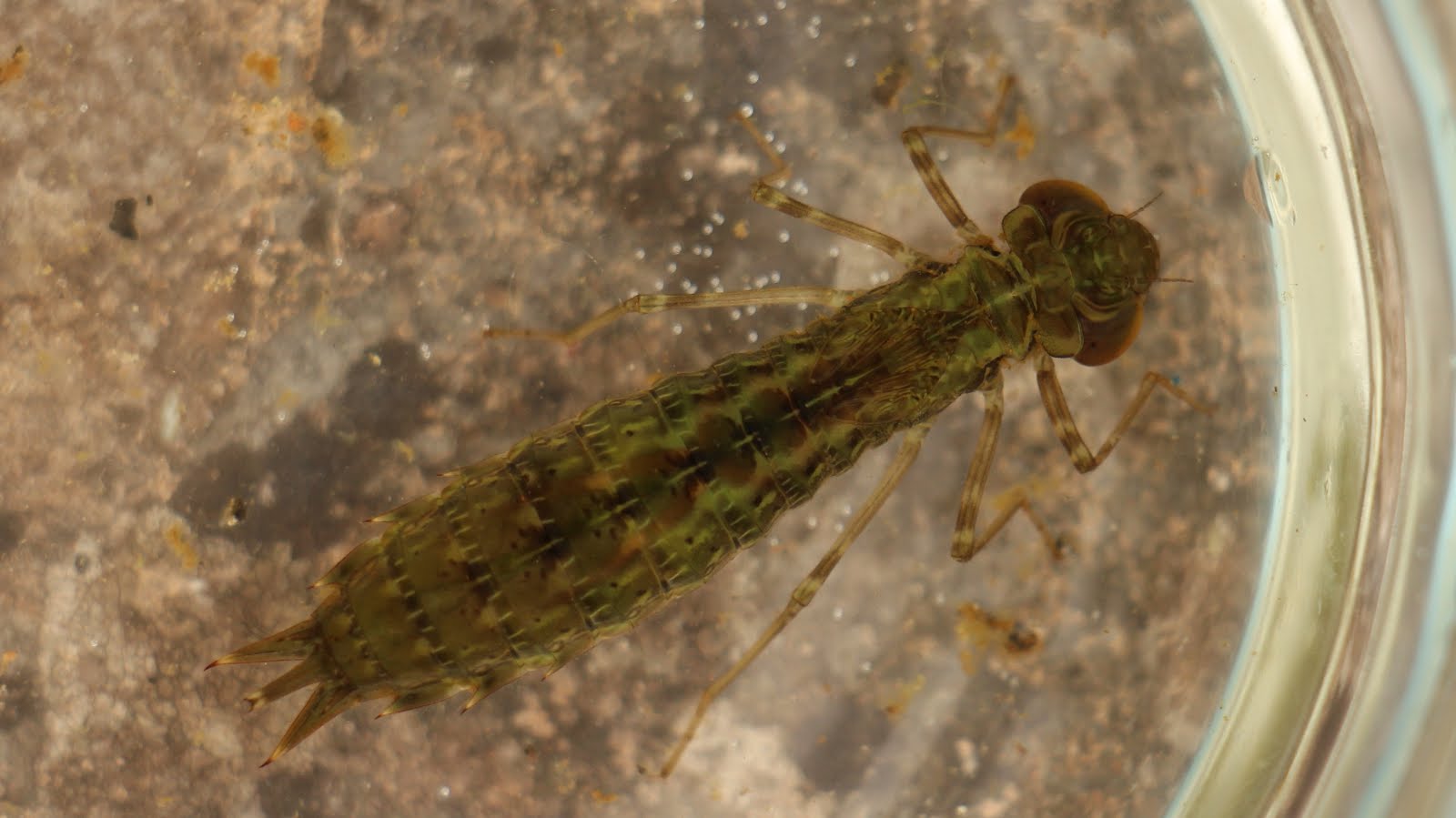
For our last day, with just about all of the adult dragonflies departed, we concentrated on looking at some of the younger larvae now showing up in the pond. The larvae spend two years underwater, so now it's the one year olds (and perhaps a very few tardy twos) that remain. Pictures below of the larvae at different stages. The developing wing sheaths are visible, even on the smallest larva where they look like tiny black scales behind the head. They get bigger through each stage of growth. All measurements rough by my eye.


Emperor Dragonfly larva (1). 1yr old (last summer's egg) Tiny <2cm.

Emperor Dragonfly larva (1). 1yr old (last summer's egg) Tiny <2cm.


Emperor Dragonfly larva (2). 1yr old. Small 2cm.


Emperor Dragonfly larva (3). 1yr old Bigger Small 2.5cm.

Emperor Dragonfly larva (4). 1yr old (last summer's egg) Medium 3cm.

Emperor Dragonfly larva (4). 1yr old (last summer's egg) Medium 3cm.

Mayfly larva. A popular dragonfly snack. <1cm.

Emperor Dragonfly larva (5). Precocious 1 year old, or late developing 2 year old. I think this one had just moulted to the final larval size. 6cm.

Emperor Dragonfly larva (5). Precocious 1 year old, or late developing 2 year old (next day from above).

Saturday, 4 June 2016

My Life With Other Animals

Today is the eighth and last day of my vigil at the kitchen garden pond attempting to film Emperor Dragonflies emerging and, just like on real telly, I've yet to see one in daytime. However, my other aims of learning all about them and sharing dragonfly love with Tyntesfield's visitors have gone extremely well. I now know the Emperor's underwater lifecycle in intimate detail and have talked to what must be over a thousand people about these extraordinary animals.

It's now 11 days since the first adults took to the air, so there is a chance the first breeding adults could return to the pond today to start laying eggs. There are also one or two stragglers in the water who might decide to emerge, but I shan't be holding my breath and will instead focus on attempting to enthuse children and adults alike with an underwater bug parade.

Below are pictures of some of the other animals who've been keeping me intrigued, entertained and spiritually buoyant over the last few days.


Male Broad-bodied chaser dragonfly

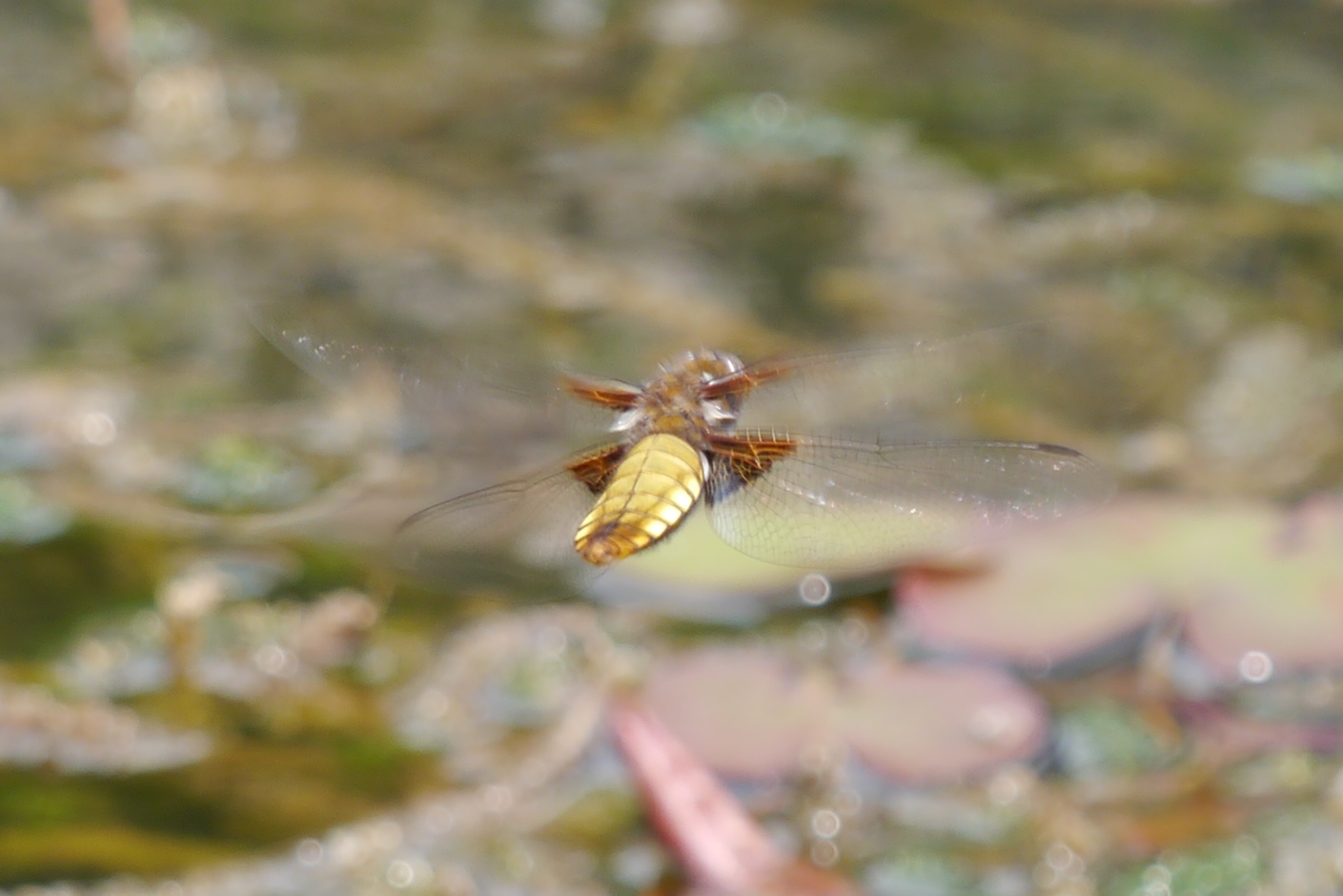
Female Broad-bodied chaser dragonfly

Female Broad-bodied chaser, egg laying with concerned expression.


Large Red Damselfly

Newly hatched damselfly, not sure of species just yet

The kitchen garden pond's two frogs. Yesterday I saw a miraculous single tadpole that had survived the dragonfly feast.

Wednesday, 1 June 2016

Last Stage From Pondsville


The Emperors have been continuing to emerge, but all at night time and so eluding my watchful, wishful filming gaze. In the meantime I've been learning much more about the underwater larvae. Once they've completed their final underwater moult, there's one final metamorphosis where the wings swell and the mouthparts change. The ferocious underwater jet propelled killing harpoon retracts into the gripping, piercing jaws of the adult.  When an individual is ready to emerge, you can see the green colouring showing through the skin, bulging eyes and a general 'uncomfortable in its own skin' kind of behaviour.

Through the photos below I also managed to distinguish between earlier larval forms. One I think is the final stage, but before the very final metamorphosis, and one an earlier stage without wing cases. Even better, I found what I thought was a completely different species, a charmingly black and white striped mini beast. This, it transpires, is in fact itself an Emperor Dragonfly nymph. About 1.5 cm long and about a year old (from last year's eggs).


Emperor Dragonfly larva on the cusp of leaving the water

Emperor Dragonfly larva after final moult (probably), but before final metamorphosis

Earlier stage (stadia) Emperor Dragonfly larva (no wing cases)
Early stage Emperor Dragonfly larva, at least 10 months old

Sunday, 29 May 2016

Emperor Explosion

Overnight between Friday night and Saturday morning at least 17 Emperor Dragonflies hatched from the pond. I found a dismembered wing, so at least one didn't make it into the air, but the calm conditions that followed the Friday evening storm were ideal for safe departures.

Barry, Friday daytime's beleaguered wing damaged individual, was still hanging around. He tried to fly and fell in the pond, so I picked him up and carried him around on my finger for a couple of hours. Saturday was the first day of the public event I am running with the National Trust and The British Dragonfly Society, so along with all the evidence of the hatch, Barry became a star attraction in capturing the attention of early visitors to Tyntesfield.

We attempted some pioneering veterinary surgery by trying to attach the found wing to Barry's withered stump with superglue, but alas our attempts failed. Various opinions were given as to how best manage Barry's end of life care (he was clearly running out of energy in front of my eyes). In the end we let him clamber on to some raspberry canes for some peace and quiet.

Over Saturday night 11 more Emperor's hatched, I visited at midnight to see it all going on, until recently I assumed it all happened in daylight hours, a magical thing to see (with the aid of an infra red camera). That brings the current tally 35 and still plenty more to come.


Barry the grounded Emperor Dragonfly. Eye damage from crash.

Barry meets visitors at Tyntesfield


A found dragonfly wing. Would it fit Barry?

Last known picture of Emperor Barry

A male Broad bodied chaser.

My first ever flying dragonfly photo. A female Broad bodied chaser.

My second ever flying dragonfly photo. Again, a female Broad bodied chaser.

Friday, 27 May 2016

Barry's Bad Day

This morning I posted about an emerging dragonfly recognisable by some damage to the case of one of its wing pairs. When I returned to the pond mid morning I found the same individual well advanced in hatching, but clearly in trouble. The inflating right wings were stuck in the shell and he (or she) was still upside down and wriggling forlornly. Normally they flip upright and pull the abdomen clear before the wings inflate.

I decided to intervene (against some people's rules, but not mine). The story unfolds in the pictures below. At some point a concerned visitor to the pond christened this Dragonfly 'Barry', so Barry it is, although I cannot say he was definitely male, it is hereafter referred to as 'he'.


Emperor Dragonfly hatching. Left wings are stuck in the shell.

I gave him a stick to hang onto to and pull himself upright, but both wing and abdomen are still stuck


I carefully broke away the loose bits of shell, freeing the abdomen. The 'stuck' bits remain on the wings.


Very, very carefully I removed the remaining pieces, but the inflation stage was already apparently over.

Such a remarkable animal, just had to wait and see now if he could fly.


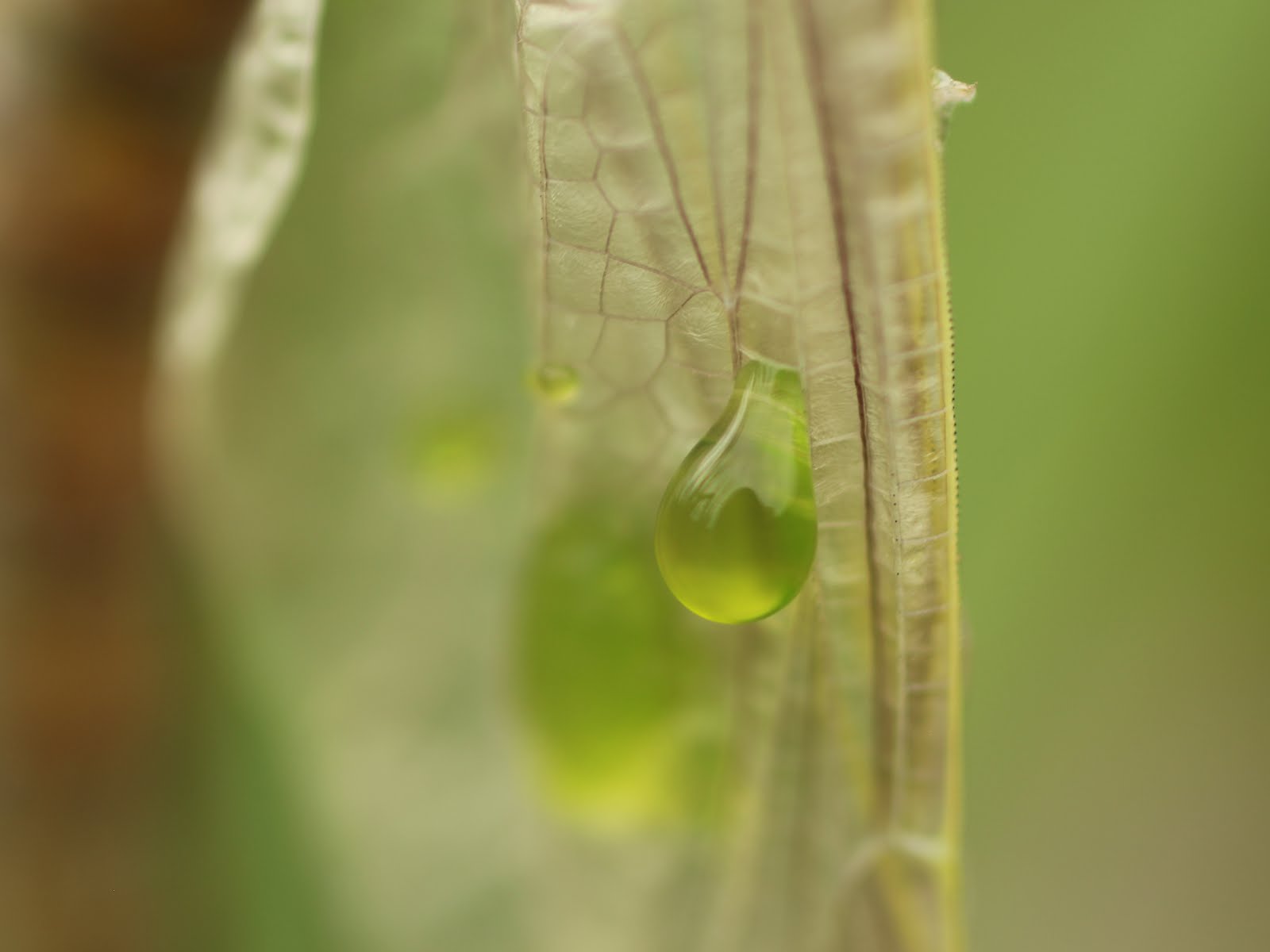
This fluid was leaking from the good wing side, not a good sign.


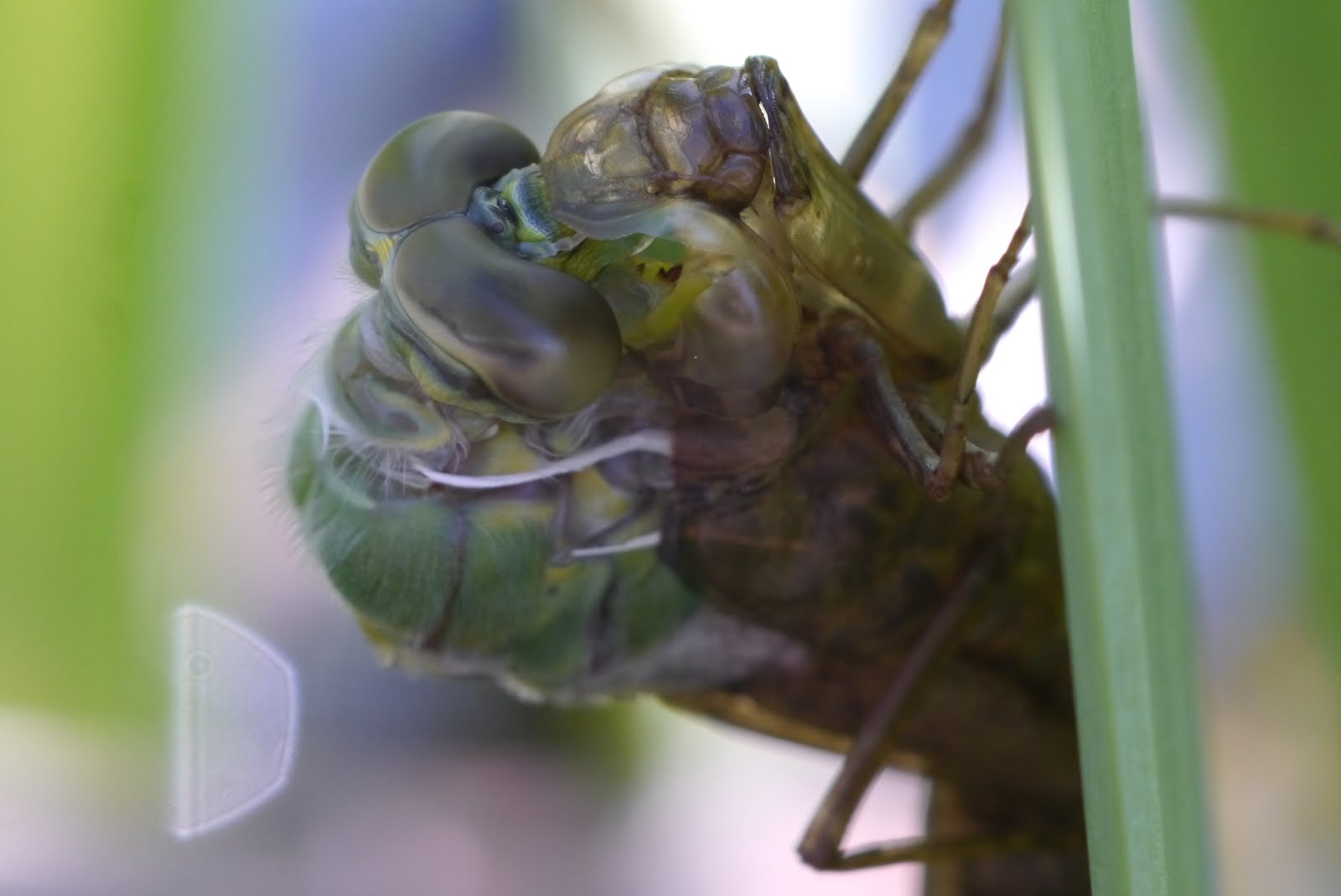
Eyes of an Emperor

Actually very hairy animals in close up

The wings hardened over time, but weren't looking too good.


Eventually they opened, but Barry failed to take off. Will he be there in the morning?

Thursday, 26 May 2016

Slow Larval Flow

Seven Emperor Dragonflies have now emerged from the kitchen garden pond since Tuesday, the pioneers of what should be a more numerous spectacle over the next few days. No casualties to beak or blow yet, but weather conditions are looking unsettled beyond the weekend and so potentially more perilous.

Two pictures below in the interests of observational science rather than the art of photography. The first is from 8pm last night. This larvae had just emerged from the water and looked set to hatch, but this morning there was no empty case (exuvia), so I assume it returned to the water and didn't make the transition. The second image is from 6am this morning, with another larvae having just crawled up an adjacent Iris leaf. I think this is quite possibly the same animal, evidenced by some apparent damage to the tip of the right wing case. Of course, it could be two individuals with similar damage, but if it's good enough for elephant ears and whale fins, then I'll take it for dragonfly identification.

Technically speaking, these are adult dragonflies in larval cases, rather than larvae at this stage, but I will be continuing to flounder with mixed terminology for the next week or so of observation and study. After this, I will hopefully myself have emerged as an expert.


Emperor Dragonfly larvae preparing to hatch (Thursday evening)

Emperor Dragonfly larvae preparing to hatch (Friday morning)

Tuesday, 24 May 2016

Dragonflies Are Go

This year I will be filming Emperor Dragonflies emerging from the Tyntesfield kitchen garden in collaboration with the National Trust and the British Dragonfly Society. I/we will be on site at the pond every day from Saturday 28th May until Saturday June 4th, documenting the spectacular event that is dragonfly hatching and sharing knowledge and enthusiasm of these extraordinary animals with visitors.

Today I went to test a camera and check on what was happening at the pond. I had the great privilege of finding the first of the season had already emerged (leaving only a larval case or exuvia behind). The second proceeded to hatch in front of me and in a very obliging position for my camera. The pictures below are a sequence of this one individual dragonfly. Spanning four hours, the last was taken seconds before it flew away. Hopefully these are the first of many that will take to the air over the next two weeks.

*If you click on a picture you get them all in a larger gallery format (without the captions).


Emperor Dragonfly (Anax imperator) just out of the water and starting to moult


First the flight muscles break through and then the head begins to pull away

The head is now fully clear of the underwater shell

The top half of the body peels back, revealing the legs

Taking an upside down fresh air breather

Still resting

The legs get pulled back in towards the body ready to swing upright. Wings still to be inflated.

After swinging up, the abdomen is released and the wings pumped up

Fluid is drained from the expanded wings and they harden

The wings open, flight muscles vibrate and the adult Emperor Dragonfly is ready for take off

Monday, 23 May 2016

Hornet and Egg

I love hornets, when I see one I am filled with mild terror, even though they are far less aggressive than wasps (which I am also fond of). I've been wanting to find a nest so I could take some pictures, but in the end the nest found me, right above my head as I ventured into my garden shed.

I took a few hasty pictures whilst the queen was out gathering building materials. In one of the cells there is an egg, the first hornet egg I have seen. Interesting to me that she builds the nest around her developing brood.

The queen abandoned this nest shortly after, possibly due to my disturbance (regrettable, but I do need to get in and out of the shed). There is another, or perhaps the same hornet hanging about nearby (a few inches away), but she doesn't seem to be particularly active in building a new nest. The old starter nest in the picture has been partially  deconstructed, presumably to recycle the materials.


A Hornet


A Hornet egg in a nest in my shed